
Showing Strength Through Vulnerability
Jason Lalli may hold a record no one wants to have. In a little over a year and a half he’s sustained three traumatic brain injuries, or TBIs. The first was when he hit his face at his birthday party.
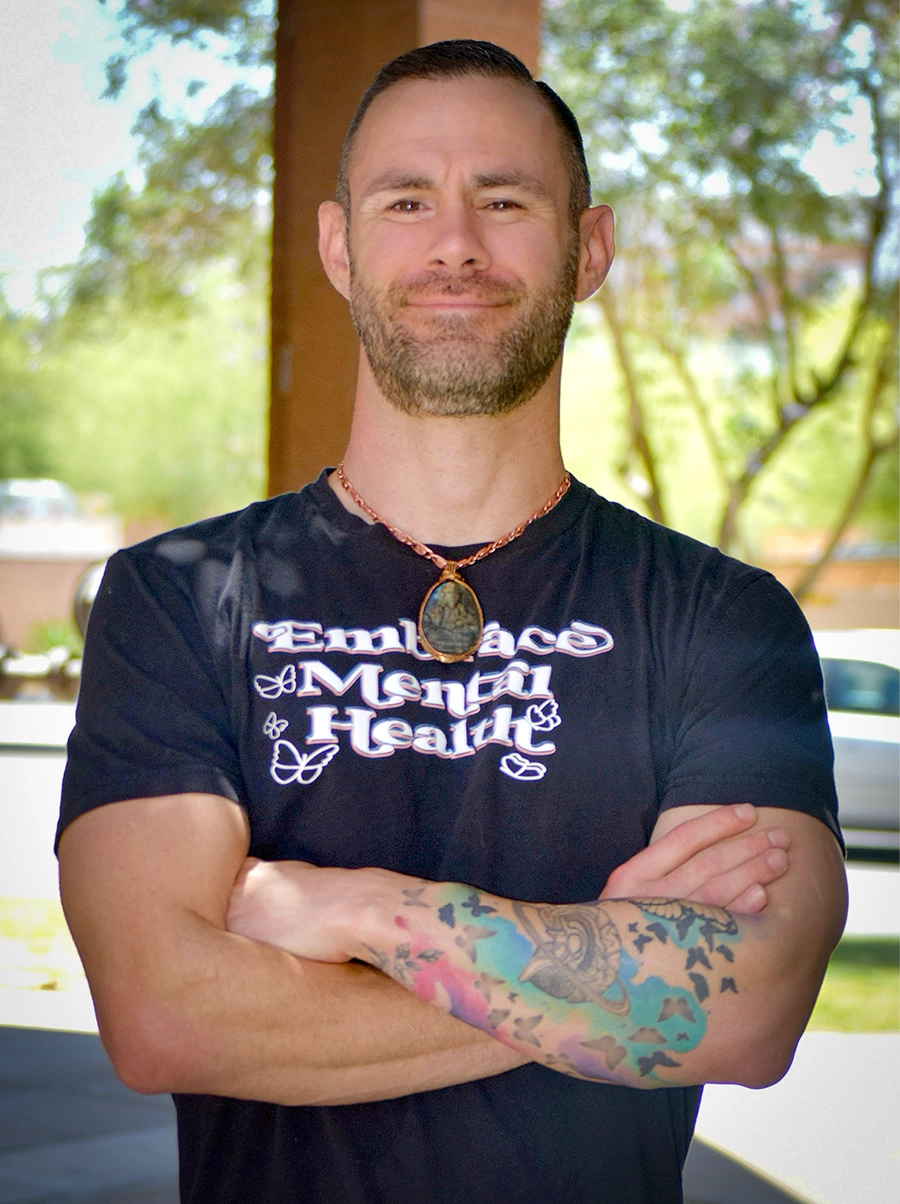
Jason Lalli’s post-injury life experiences have inspired him to become a prolific TBI advocate, using social media to candidly explain his experiences and throw light on to some of the darker corners of living with brain injury.
Showing Strength Through Vulnerability
Jason Lalli may hold a record no one wants to have. In a little over a year and a half he’s sustained three traumatic brain injuries, or TBIs. The first was when he hit his face at his birthday party.
Jason Lalli’s post-injury life experiences have inspired him to become a prolific TBI advocate, using social media to candidly explain his experiences and throw light on to some of the darker corners of living with brain injury.
Three weeks later, Jason was in a car accident in which he was rear-ended. The impact wasn’t hard enough to cause a second concussion, but it did exacerbate the fogginess and disorientation he was already experiencing from the birthday incident. Or, as he put it, the vehicle crash put him “back in the cloud.”
Then, in September of 2018, Jason was working as a valet manager at a private country club. Ongoing construction over the summer had left a clothesline rope between two parking rows and Jason hit it at full speed. That injury was so severe it was declared a near-internal decapitation. After that, Jason began to receive more in-depth care and therapy for his injuries.
Jason’s fourth and final TBI happened when he was towing a boat with a co-worker from Phoenix to International Falls, Minnesota, a 40-hour drive. Upon arrival in Minnesota, he and his co-worker went to a bar to decompress. While shooting darts, Jason was sucker punched by another man so hard his nose was broken and his forehead was dented.
That was when he was finally formally diagnosed with many of the symptoms he’d been experiencing – trouble finding words, fatigue, emotional volatility, and general fogginess.
Jason learned quite a bit from those experiences. About the impacts a TBI can have, about himself, about the medical field, and about navigating the world as a brain injury survivor.
“I felt very alone, I felt very confused, I felt very isolated,” Jason said. “I was suicidal. So I became my own light in the darkness.”
His post-injury life experiences – some of which include major life transitions and systemic obstacles – have inspired him to become a prolific TBI advocate, using social media to candidly explain his experiences and throw lights on to some of the darker corners of living with brain injury.
Prior to his injury, Jason had been an experienced motivational speaker and spoken word poet. He was emotionally intelligent and even had training in social-emotional learning.
Now, that foundational skill set and part of his identity were not gone, exactly, but no longer as accessible to him, either.
“After brain injury happened, I lost a lot of those skills,” Jason said. “To regulate myself, I had to re-learn them.”
Still, at the same time Jason felt as though he’d found a calling, too.
“I felt like my life really led me to, and my spirit kept telling me, ‘I need to speak, I need to speak,'” Jason said.
He began recording his experiences, at first informally, as vlogs. The response was immediate and larger than anything he could have imagined.
“What I found was that so many people were relating to the way I was explaining my experiences, people with five, 10, 15, even 50 years started saying, ‘How are you expressing what I was never able to express?'” Jason said.
The response fueled his desire to continue speaking his unvarnished truth.
“Those comments started overwhelming me on my videos,” Jason said. “I got to a point where I couldn’t deny the reflection that they were showing me in the mirror of what my impact was to their life.”
Jason is known for not pulling any punches in his online videos and posts, speaking frankly and honestly about some of the more difficult parts of living as a TBI survivor. His posts span a spectrum from introspection about the changes he’s undergone as a result of his injury to messages for caregivers and loved ones of survivors.
“What sets me apart is that I am not afraid to be vulnerable,” Jason said. “I do express the TBI rage, I do express the hard things that we don’t talk about often, and I express them in relatable ways,” Jason said.
One of those lesser-known places is what he calls a gap between acute recovery and re-entry into normal life.
“I think doctors are very good at acute care but there’s a very big gap that we need bridged to the actual survivor experience,” Jason said.
Today, in addition to his specifically curated library of over 100 videos, separated into categories, and other materials for TBI survivors and caregivers, Jason has founded his coaching, mentoring, and bullying prevention organization, Decisive Life.
His ultimate goal is to change how TBI is understood and handled by brain injury survivors, caregivers and brain injury professionals.
“Although I’m different, I actually feel like I’m better, I’m wiser and I’m stronger,” Jason said.
Jason believes this can be true for other TBI survivors, too.
FIND JASON
PATREON: Patreon.com/VulnerablyLalli
FACEBOOK: https://www.facebook.com/VulnerablyLalli
TIKTOK: https://www.tiktok.com/@vulnerablylalli
INSTAGRAM: https://www.instagram.com/vulnerablylalli
YOUTUBE: https://youtube.com/@vulnerablylalli
The Brain Injury Association of Arizona is the state’s largest nonprofit organization dedicated to improving the lives of brain injury survivors, their families, and caregivers. Your generous support is crucial to continue providing them with programs and services.
ABOUT BRAIN INJURY ASSOCIATION OF ARIZONA
The Brain Injury Association of Arizona (BIAAZ) is the only statewide nonprofit organization dedicated to improving the lives of adults and children with all types of brain injuries through prevention, advocacy, awareness and education. BIAAZ also houses the Arizona Brain Health Resource Center, a collection of educational information and neuro-specific resources for brain injury survivors, caregivers, family members and professionals.
What began in 1983 as a grassroots effort has grown into a strong statewide presence, providing valuable life-long resources and community support for individuals with all types of brain trauma at no charge.