
Being a Teen Online: Social Media and the Teenage Brain
By Christina Eichelkraut
As the first generation to be online their whole lives reaches adolescence, everyone from parents and teachers to behavioral scientists and psychiatrists are asking how exposure to social media during their formative years has impacted this generation.
For some, the question has been asked and answered: social media is negatively impacting teens, and something must be done. From a U.S. Department of Health and Human Services Surgeon General advisory and academic studies to concerns from parents, teachers, doctors and the general public, dire warnings about social media use and young people have been issued for years.
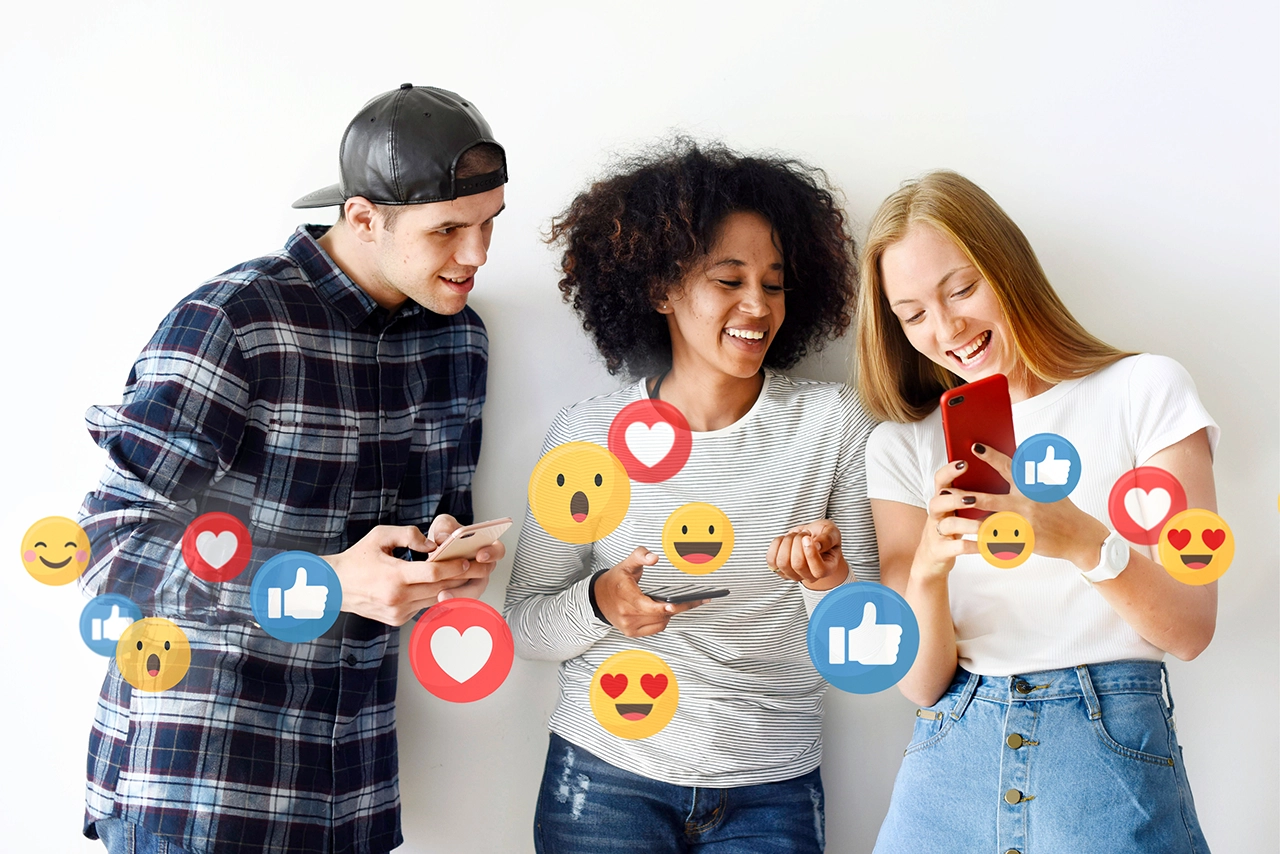
Demonizing social media doesn’t really address the actual problem at hand, which comes down to when, why, and how much social media is used by a teen (or anyone, for that matter).
Being a Teen Online: Social Media and the Teenage Brain
By Christina Eichelkraut
As the first generation to be online their whole lives reaches adolescence, everyone from parents and teachers to behavioral scientists and psychiatrists are asking how exposure to social media during their formative years has impacted this generation.
For some, the question has been asked and answered: social media is negatively impacting teens, and something must be done. From a U.S. Department of Health and Human Services Surgeon General advisory and academic studies to concerns from parents, teachers, doctors and the general public, dire warnings about social media use and young people have been issued for years.
Demonizing social media doesn’t really address the actual problem at hand, which comes down to when, why, and how much social media is used by a teen (or anyone, for that matter).
The most dramatic and tangible reaction to this undercurrent of concern is a recent law passed by the New York state legislature that requires social media platforms with addictive features – things like automatic, endless scrolling – to display a warning message to young users, similar to the warnings on cigarettes or alcohol.
The Well-Known External Risks and Dangers
The external risks to young people who use social media – which, according to numerous studies conducted over the past several years, is nearly every teen – are pretty well known by now.
Predators can use virtually fostered connections to lure teens into dangerous situations, from cults and kidnapping to sex trafficking and worse. Social media platforms enable a relentless, constant bullying that has led to many teen suicides. And of course, there’s the same social media risks everyone, including adults, is vulnerable to: misinformation, disinformation, and addictive behavior.
In response to these threats, there are parental monitoring apps, guidelines for parents, outright phone bans in some schools, and other tools.
The Internal Risks of Teen Social Media Usage
But what about what’s happening inside of teens who use social media? How does social media impact their emotional and mental well-being, or even their physical brain (which, of course, is inextricably linked to mental health)?
The Physical Brain and Social Media
Let’s start with the actual brain.
Put simply, an adolescent brain is still physically developing new cellular structures, connections and processes. A teen brain is in some respects physically like soft clay that is molded by what it is exposed to.
More specifically, a teen’s prefrontal cortex is still physically developing and their ventral striatum, another part of the brain, is actively growing receptors for the hormones that make you feel good like oxytocin and dopamine.
Those are the hormones that get produced when a “social reward” – such as a compliment on a new hairstyle or a “like” on a social media post – occurs. When those hormones hit a new or growing receptor, the feeling is more intense. This is equally true for negative emotions; what we call “adolescent angst” is a real biological state; everything is a life-ending big deal to your 14-year-old because, in their body, it honestly does feel that way to them.
And while it’s true that adults also react to social media rewards, because an adult’s prefrontal cortex is more mature and physically solidified, and because adults have a deeper understanding of who they are as a person, their brain’s reaction to social rewards is more regulated (usually).
So far, the research seems to corroborate this.
A three-year long JAMA study that began with a cohort of 12-year-old teens compared outcomes among those who consistently checked their social media and those who did not. Among the teens who did check social media consistently, researchers found the areas of the brain associated with social reward and punishment – already at a heightened state of sensitivity during adolescence – were impacted.
Other areas affected include the dorsolateral prefrontal cortex, which is responsible for judgment, reasoning, and reward processing, and the amygdala, which is involved in fear and responses to strong stimuli.
The study found that the teens who constantly checked their social media became less sensitive to real-world pleasures because the dopamine spikes produced by social media rewards created an addiction of sorts to that specific dopamine spike. So even if a teen does “touch grass” (slang for going out in the real world) that experience is no longer more satisfying than seeing a Like count go up. This is the foundation of internal addiction.
Additionally, the prefrontal cortex, which helps regulate responses to dopamine surges, under develops in adolescents who are exposed to excessive screen time.
Teens, Social Media, and Mental Health
But what does all this biology mean when it comes to a teen’s mental health?
Again, the research paints a dire picture – but there is some good news, too.
First, nearly a decade of research on teens and social media has helped us understand some of the impacts very well. Namely:
Teens who use social media, especially when it is used excessively, tend to (ironically) become more isolated. It has also been tied to an increase in teen eating disorders, depression, and disrupted sleep patterns.
Some of this has to do with the fact that virtual relationships don’t offer certain nonverbal, or even pheromone-based, feedback that our brains are wired to accept. This leads to a “partial” social experience and often stunted social cues, such as developing empathy and the ability to read facial expressions.
Another aspect that contributes to poor mental health amongst teenage social media user is the relentless barrage of comparison fodder, whether it’s seeing a party they weren’t invited to on full display or being lulled into “thinspiration” posts.
And although the high use of social media and virtual environments due to the Covid-19 pandemic is often blamed for this phenomenon, in fact, mental health emergency room visits were already climbing even before the pandemic took hold.
All Hope is Not Lost
Though all of this paints a grim picture, all hope is not lost.
Social media isn’t evil. Like all societal issues, social media use also has many concrete benefits for teens and is an integral part of modern social life. Demonizing social media doesn’t really address the actual problem at hand, which comes down to when, why, and how much social media is used by a teen (or anyone, for that matter).
In addition to governments and systems taking concrete action to address social media usage amongst teens, there are also other aspects of this issue that offer hope.
Teens know that social media is bad for them, and while they may not be willing (or, realistically, able) to give it up entirely, more teens are opting out of their smartphones. They are beginning to embrace analog hobbies and trends and willingly putting their phones down for IRL social interaction.
Parents are more saavy, too. That means they’re setting better boundaries around screen time and social media usage and creating better habits in their teens.
As more long-term study results come out, people will generally be able to create better adaptations for healthy, productive social media use.
Christina Eichelkraut is a former print journalist who founded Christina Copy Co. in 2011. When her keyboard isn’t clacking, she bakes complex artisan bread, nerds out on political science, uses her fountain pens to write to pen pals the world over, and reads long past her bedtime in a joyful disregard of her alleged adulthood. Christina earned her B.A. in Mass Communications with an emphasis in print journalism in 2006 from Franklin Pierce University.
The Brain Injury Association of Arizona is the state’s largest nonprofit organization dedicated to improving the lives of brain injury survivors, their families, and caregivers. Your generous support is crucial to continue providing them with programs and services.
ABOUT BRAIN INJURY ASSOCIATION OF ARIZONA
The Brain Injury Association of Arizona (BIAAZ) is the only statewide nonprofit organization dedicated to improving the lives of adults and children with all types of brain injuries through prevention, advocacy, awareness and education. BIAAZ also houses the Arizona Brain Health Resource Center, a collection of educational information and neuro-specific resources for brain injury survivors, caregivers, family members and professionals.
What began in 1983 as a grassroots effort has grown into a strong statewide presence, providing valuable life-long resources and community support for individuals with all types of brain trauma at no charge.